

international environmental law
Enforcing the protection of national parks during wartime
The protection of national parks during wartime is often overlooked. In this blog, Jérôme de Hemptinne explains that although the law of armed conflict provides some protection to these areas, it is limited and often weakened by military considerations; he argues that international environmental law can reinforce this framework by guiding interpretation and maintaining conservation obligations during conflict, while highlighting ongoing uncertainties about military use of parks, extraterritorial responsibilities, the role of non-State actors, and the vulnerable legal status of park rangers.
The author would like to warmly thank Alessandra Spadaro and Dionysios Pelekis for kindly reviewing this text and for providing many valuable suggestions. Any remaining errors are the author’s.
Jérôme de Hemptinne is Assistant Professor of International Law, at Utrecht University Law School.
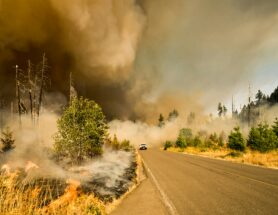
National parks have repeatedly been directly or indirectly affected – and, in some instances, deliberately targeted – by armed conflict, both in Ukraine and across several regions of the world, particularly in Africa. Countries such as Burkina Faso, Benin, and Niger (within the transboundary W–Arly–Pendjari Complex), Cameroon (Bouba Ndjidda and Bénoué National Parks), the Democratic Republic of the Congo (Virunga and Kahuzi-Biega National Parks), Mali (the Boucle du Baoulé Biosphere Reserve), Mozambique (the Niassa Special Reserve) and the Central African Republic (Manovo-Gounda-St Floris National Park) provide striking illustrations.
However, the dynamics through which these parks are subjected to conflict-related pressures in the Ukrainian context differ markedly from those observed in several African settings. In the international armed conflict (IAC) between Russia and Ukraine, many protected areas are situated in strategically significant frontline zones – such as forests, river corridors, and elevated terrain – and have therefore been exposed to shelling, landmines, and the construction of military fortifications, as well as to collateral damage resulting from attacks on adjacent civilian and energy infrastructure. By contrast, in several African contexts, national parks are primarily affected by non-international armed conflicts (NIACs) involving non-State armed groups. In these situations, protected areas are frequently used as hideouts, transit routs, or resource bases.Their remoteness, limited State presence, and abundance of valuable natural resources – such as timber, minerals, and wildlife – make them particularly conducive to the financing of hostilities through illegal exploitation.
Despite these contextual differences, a consistent pattern emerges. In both IAC and NIAC, environmental harm is frequently regarded by belligerents as militarily expedient, economically advantageous, or legally low-risk. National parks are thus increasingly relegated to the status of silent victims of contemporary warfare.This reality gives rise to a central legal question: how are national parks protected under international law in situations of armed conflict? To address this question, the present blog post adopts a two-step methodological approach. It begins by examining the applicable rules of the law of armed conflict (LOAC) governing situations of armed conflict, before turning to the reinforcing and complementary role played by international environmental law (IEL).
The protection of national parks under LOAC
Under LOAC, national parks are, as a general rule, civilian objects and therefore benefit from protection against armed attack in both IAC and NIAC (Art. 52(1) Additional Protocol I (AP I); Rules 7, 8, 9, 10 & 43 ICRC Customary Law Study). This protection is not absolute, however. It may be lost where – and only for such time as – specific parts of a national park qualify as military objectives, for example where armed forces are deployed within the park, where the park hosts military bases, command or communication facilities, weapons depots, or surveillance installations, or where it is used as a staging ground, transit route, or firing position for military operations (Art. 52(2) AP I; Rules 8 & 10 ICRC Customary Law Study). Crucially, any such loss of protection is strictly confined to the military objectives concerned and does not extend to the park as a whole.
Even in such circumstances, belligerents remain fully bound by the rules governing the conduct of hostilities, including the principles of distinction, proportionality, and precautions in attack (Arts. 51(5)(b), 52 & 57 AP I; Rules 7, 14 & 15 ICRC Customary Law Study). Among these principles, the application of proportionality creates particular challenges in this context. Assessing whether incidental damage to a fragile ecosystem would be excessive in relation to the concrete and direct military advantage anticipated entails the balancing of incommensurable values. Environmental harm is frequently long-term and cumulative, and often marked by scientific uncertainty; characteristics that significantly complicate ex ante proportionality assessments, particularly for non-State actors who may lack the technical capacity to evaluate long-term and diffuse environmental consequences. Beyond proportionality, LOAC also establishes substantive limits on permissible environmental damage. Attacks expected to cause “widespread, long-term, and severe damage” to the natural environment are prohibited per se, irrespective of any anticipated military advantage. This prohibition is of particular relevance to national parks given their heightened ecological value (Art. 35(3) & 55(1) AP I, Rule 43(C) & 45 ICRC Customary Law Study), even though its precise contours remain unclear. This issue will be revisited below.
The obligation to take precautions further strengthens the protection of national parks. Belligerents must, for instance, take all feasible precautions in the choice of means and methods of warfare, as well as in the timing of attacks, in order to minimise incidental environmental harm (Art. 57 AP I; Rule 15 ICRC Customary Law Study). In this context, this may include avoiding ecologically sensitive periods – such as bird nesting seasons, mammal breeding or calving periods, or seasonal migrations – during which disturbance or habitat destruction may have particularly severe and irreversible consequences. It may also entail selecting weapons and tactics that are less likely to cause fires, soil degradation, or long-term contamination.
In addition, LOAC requires parties to take precautions against the effects of attacks, including – where feasible and ideally already in peacetime – avoiding the placement of military objectives within or in close proximity to national parks, precisely because such placement predictably exposes these areas to serious harm once hostilities arise (Art. 58 AP I, Rules 22, 23 & 24 ICRC Customary Law Study). Finally, LOAC provides for the creation of specially protected demilitarised zones, from which military objectives must be excluded and attacks are strictly prohibited (Art. 60 AP I, ILC Principle 4 of the Draft Principles on the Protection of the Environment in Relation to Armed Conflicts). In principle, national parks could fall within this category, thereby benefiting from enhanced protection. In practice, however, the creation of such zones depends on the agreement of the parties to the conflict and is rarely achieved once hostilities are underway.
The added value of IEL
Much of the LOAC framework outlined above is well established, as reflected in the extensive analysis conducted by the ICRC in its recent Guidelines on the Protection of the Natural Environment in Armed Conflict (ICRC Guidelines) (see Obregón Gieseke, Murphy). Considerably less attention has been devoted to the ways in which IEL might reinforce and complement the protection afforded by LOAC (see, however, the notable contributions of Dienelt; Hulme; Sjöstedt). This relative neglect has important implications as LOAC was not designed to ensure the conservation of nature per se, but rather to regulate the effects of hostilities on the environment. IEL, by contrast, provides a broader and more protective framework for the conservation of national parks, albeit one whose application must be carefully adapted to the exigencies of armed conflict.
In this respect, IEL can play a dual role: an interpretative role and a complementary one (van Steenberghe). Each of these roles is briefly examined in turn.
First, environmental norms may perform an interpretative function with regard to LOAC, most notably through the principle of systemic integration reflected in Article 31(3)(c) of the Vienna Convention on the Law of Treaties. Environmental treaties, standards, and principles may thus inform the interpretation LOAC rules as they apply to the natural environment, particularly in proportionality assessments, in the evaluation “widespread, long-term and severe” environmental damage, and in the determination of the scope of feasible precautions. Indeed, numerous environmental treaties impose obligations on States to designate and protect areas of particular ecological value, including national parks or areas that may encompass them. For example, the Ramsar Convention requires States to designate wetlands of international importance and to promote their conservation and wise use (Arts. 2 and 3). The Convention on Biological Diversity obliges States to establish systems of protected areas, or areas where special measures are required to conserve biological diversity (Art. 8(a)), within which national parks constitute a central legal instrument. The World Heritage Convention, for its part, requires States to identify, protect, conserve, and transmit to future generations natural sites of outstanding universal value, including many national parks inscribed on the World Heritage List (Arts. 4 and 5). Through these instruments, States do not merely recognise sites of environmental significance; they formally attribute enhanced legal value to specific territories and assume heightened obligations of care with respect to them.
This normative elevation should inform the interpretation and application of LOAC when military operations affect such areas. In proportionality assessments, for instance, the fact that a military operation would impact a legally protected area should therefore carry particular weight when balancing anticipated military advantage against incidental environmental harm. Similarly, environmental damage that might not qualify as “widespread, long-term, or severe” in a general context may more readily meet this threshold when inflicted upon a national park, given the concentration of irreplaceable biodiversity, the ecological interdependence of protected habitats, and the risk that even limited harm may trigger cascading and potentially irreversible effects. Considerations drawn from IEL should likewise shape the content of precautionary obligations, influencing decisions regarding weapons selection, operational planning, and even the level of command at which attacks likely to affect national parks are authorised.
Second, environmental instruments are generally understood to remain directly applicable during armed conflict. The World Heritage Convention and the Ramsar Convention explicitly or implicitly envisage their continued operation in wartime, per paragraph 31 of the ICRC Guidelines, while the Convention on Biological Diversity, although formally silent on the matter, is likewise presumed to remain in force (ICRC Guidelines, §32). Their continued applicability has the potential to decisively strengthen the protection of national parks. As emphasised above, the establishment of protected zones under LOAC typically depends on the consent of the belligerents. By contrast, IEL imposes obligations on States – albeit obligations of conduct reflecting a due-diligence standard – to establish, manage, and safeguard protected areas. Crucially, these obligations do not lapse in times of armed conflict. In principle, therefore, State armed forces should refrain from conducting military operations within such areas. The scope of this restraint may be informed by the conservation objectives attached to the protected status of the area concerned. National parks are generally classified under the categories developed by the International Union for Conservation of Nature (IUCN) as areas designated primarily for the protection of large-scale ecological processes, ecosystems, and species, while permitting only “environmentally and culturally compatible spiritual, scientific, educational, recreational and visitors opportunities”. Military operations plainly fall outside these permitted uses and are thus incompatible with the conservation objectives underpinning the protected status of national parks. Read together, these instruments suggest a presumption against military activity in such areas, grounded in the substantive environmental obligations assumed by States. That said, as will be discussed below, the application of this presumption must be approached with nuance, particularly in light of the constraints imposed by military necessity and the specific factual circumstances of armed conflict.
Key questions on IEL application
Notwithstanding the foregoing, four important questions remain unresolved and warrant closer examination.
First, the presumption against military activity within national parks articulated above cannot be applied in an absolute manne. When significant military objectives are located within or operate from national parks, it would often be unrealistic for most States to refrain entirely from military action, particularly when combating armed groups that deliberately exploit protected areas to destabilise State authority. In such circumstances, military engagement may even be necessary to secure other legitimate interests, such as preventing the overexploitation of forest resources, protecting park rangers and other environmental defenders from attack, or ensuring that endangered species are not poached or killed. This raises the question of whether, in such circumstances, the application of IEL obligations to protected areas – including the duty to avoid conducting any harmful activities within them – may be entirely displaced by LOAC rules on the conduct of hostilities, understood as lex specialis, on the ground that their concurrent application would be incompatible (see ICRC Guidelines, §32). Such a conclusion would, however, effectively strip national parks of any meaningful legal protection during armed conflict. A more balanced approach would instead seek to reconcile these two bodies of law, rather than to prioritise one to the exclusion of the other. Accordingly, it may be argued that, even where military operations within national parks cannot be avoided, armed forces should conduct them in a manner that minimises harm to the protected area. This would entail, inter alia, the adoption of heightened precautionary measures, the application of the principle of proportionality in an exceptionally restrictive manner, and the requirement that decisions to conduct such operations be taken at the highest levels of command. Ultimately, this debate returns to the broader question identified earlier: whether LOAC rules on the conduct of hostilities should be interpreted in light of principles derived from IEL, or, conversely, whether IEL obligations to protect national parks remain applicable during armed conflict but may be implemented with greater flexibility – consistent with their obligations-of-means character – to reflect the practical realities of warfare. These issues call for further, in-depth analysis.
Second, while these obligations clearly bind States conducting military operations within their own territory, it remains uncertain whether – and to what extent – they extend extraterritorially to national parks located in the territory of another State. For instance, do IEL obligations require Russia to protect national parks in Ukraine beyond the minimum safeguards imposed by LOAC? The existence and scope of such extraterritorial obligations remain contested (Vordermayer, pp. 110; Hulme, p. 1180, de Hemptinne, pp. 1402-1403). Nonetheless, it may be contended that certain areas should benefit from at least a minimum level of protection against attack, consistent with the due diligence and no-harm principles that underpin IEL. This is particularly compelling where the destruction of a protected area would cause widespread or irreversible ecological disruption. The concern is heightened in the case of transboundary ecosystems or areas containing shared or unique natural resources, where environmental harm in one State may generate significant and lasting ecological consequences beyond its borders. Viewed through this lens, even extraterritorial military operations should be conducted in a manner that minimises harm to internationally significant or shared natural assets.
Third, uncertainties also arise with respect to the personal scope of IEL. While it is generally accepted that States remain bound by their environmental obligations during armed conflict, it is far less clear whether – and to what extent – such obligations apply to non-State armed groups (and a similar question may also arise in respect of business entities). States have traditionally resisted extending IEL obligations to these actors, largely out of concern that doing so might confer a degree of de facto legitimacy upon them. Nevertheless, persuasive – albeit contested – arguments suggest that IEL may bind non‑State armed groups where they exercise effective territorial control and perform quasi‑governmental functions. In such circumstances, extending environmental obligations to these actors may be justified not on the basis of legal status, but on their capacity to affect the environment and to regulate activities within the territory under their control. This is especially important given that many national parks in Africa are de facto partly or wholly influenced by armed groups. For instance, in Virunga National Park in the eastern Democratic Republic of the Congo, various rebel groups such as the Democratic Forces for the Liberation of Rwanda (FDLR), the Allied Democratic Forces (ADF), the M23, Mai-Mai militias, have operated within and controlled parts of the park, hindering conservation and governance efforts. Similarly, in Garamba National Park, the Lord’s Resistance Army and other armed poachers have occupied and used areas of the park for extended periods, engaging in armed clashes with rangers and undermining central authority. Across West Africa, jihadist and separatist militants have exploited the vast and remote terrains of parks like the W National Park or the Niassa Special Reserve where militants use park landscapes as sanctuaries and operational bases.
Lastly, the effective protection of national parks during armed conflict depends to a large extent on those responsible for their management and on-the-ground security, commonly referred to as rangers. Ensuring their own protection is essential if they are to discharge their conservation mandate effectively. Rangers are typically employed by government ministries responsible for the environment, forestry, or wildlife, but they may also work for NGOs, private conservation organisations, local communities, or serve in a voluntary capacity. As a matter of principle under IHL, they qualify as civilians and may not be deliberately targeted. In practice, however, their civilian protection has become increasingly precarious in conflict-affected regions such as Kivu in the Democratic Republic of the Congo, where rangers are frequently drawn into processes of “green militarisation”, namely the pursuit of conservation objectives through military-style strategies. By adopting tactics, structures, training, weaponry, and operational methods traditionally associated with armed forces – including patrols against armed groups and cooperation with state security forces – rangers risk being regarded as civilians directly participating in hostilities. Under IHL, civilians lose protection against direct attack when, and for such time as, they directly participate in hostilities. If the cumulative criteria of direct participation are met (threshold of harm, direct causation, and belligerent nexus), rangers may lawfully become military objectives, but only for the duration of that participation. Once they cease such conduct, their civilian protection is restored. It is also important to highlight that, unlike medical personnel, civil defence units, or humanitarian relief personnel – who benefit from specific protective regimes under the Geneva Conventions and their Additional Protocols — rangers enjoy no special or enhanced status under IHL while performing conservation functions.
This means, briefly, that: heir conservation activities are not expressly recognised as protected functions under IHL and that their equipment and facilities (such as patrol posts, vehicles, or surveillance infrastructure) do not benefit from specific emblem-based or status-based protection. In other words, their protection is entirely dependent on their civilian character and the civilian nature of the objects they use, not on the environmental importance of their mission. Yet, insofar as rangers safeguard ecosystems that are indispensable to the survival, health, and livelihoods of local populations – including water sources, food chains, and climate-regulating forests – their role bears certain functional similarities to that of civil defence or humanitarian actors. This raises the normative question whether, by analogy, they might merit a comparable elevated or clarified protective status under IHL, particularly in biodiversity hotspots whose degradation would have severe humanitarian consequences. A complementary regime of protection may likewise be derived from IEL, insofar as its application remains compatible with the exigencies of armed conflict. Multilateral environmental agreements providing for the protection of endangered areas – such as wetlands, biodiversity hotspots, and World Heritage sites – presuppose that States ensure the effective conservation, management, and safeguarding of such designated areas. This obligation necessarily extends to the protection of persons entrusted with their administration and related functions. That said, the continued applicability of this standard may be superseded by norms of IHL where such persons directly participate in hostilities?
In conclusion, the protection of national parks during armed conflict remains both legally grounded and practically fragile. While the law of armed conflict provides an essential baseline by classifying these areas as civilian objects and limiting permissible harm, its framework is inherently constrained by military necessity and interpretative uncertainty. International environmental law offers a crucial added layer, not only by informing how these rules should be understood, but also by maintaining conservation obligations even in wartime. Yet, significant challenges persist, including the regulation of military activities within protected areas, the extent of extraterritorial duties, the role of non-State actors, and the precarious legal position of park rangers. Addressing these gaps will be key to ensuring that national parks are no longer treated as expendable spaces in times of conflict, but rather as vital global commons deserving of heightened and effective protection